

Soil and plant fertilisers


-
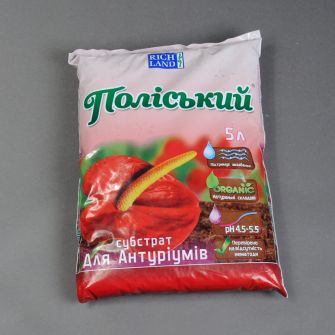 Soil for anthurium 5L
2371
Expected
-
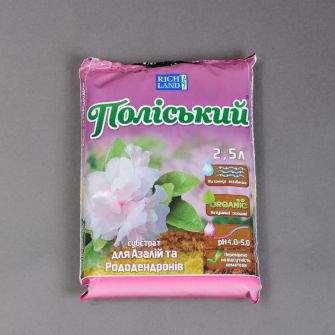 Soil for azaleas and rhododendrons 2,5L
22084
Expected
The condition of a houseplant's root system depends directly on the composition of its substrate and the regularity of feeding — these two factors determine whether a plant actively builds foliage, forms buds, and resists disease. A store-bought soil that has not been refreshed for years, or one chosen without regard to the specific plant type, gradually loses its nutritional properties: its structure compacts, the roots receive less oxygen, and substrate souring leads to root rot. Another common problem among growers is chlorosis caused by iron and other micronutrient deficiencies, when leaves yellow between the veins and the plant refuses to bloom even under adequate light.
The "Soils and Fertilizers for Plants" category brings together ready-made substrates and feeding systems selected to match the physiological needs of specific plant groups. Choosing the right base soil and subsequent feeding helps avoid common repotting mistakes, speeds up a plant's adaptation to its new environment, and lays the foundation for abundant flowering.
Classification of Professional Substrates and Soil Mixes
The assortment includes both universal substrates suitable for most foliage plants and narrowly specialized mixes developed around the root anatomy of particular species. Orchid soil is formed on a base of coniferous bark with increased aeration, since the roots of these epiphytes require oxygen access and cannot tolerate stagnant moisture. Substrates for cacti and succulents contain a higher proportion of sand and loosening agents for rapid drainage of excess moisture. Mixes for aroids (anthurium, monstera, spathiphyllum) combine nutrient content with looseness, while soil for citrus and azaleas is formulated to meet these plants' need for a slightly acidic environment.
The quality of any substrate is determined by its component makeup. High-moor peat provides looseness and low density, while low-moor peat offers higher nutrient content and buffering capacity. Coconut coir serves as an eco-friendly alternative to peat: it retains moisture well, decomposes slowly, and has a neutral pH. Perlite and vermiculite are responsible for aeration and drainage properties, preventing the soil from compacting after watering. Zeolite additionally regulates moisture and gradually releases beneficial minerals, while charcoal is traditionally used to disinfect root cuts and prevent rot during repotting.
Fertilizers and Growth Stimulants: How to Choose a Feeding System
Feeding houseplants falls into several categories by origin and release form. Organic fertilizers (compost, humus, biohumus) gradually enrich the soil and improve its microbiological activity, while mineral fertilizers act faster and allow precise control over the concentration of specific elements. Organo-mineral complexes combine the advantages of both approaches. By release form, fertilizers come as liquid concentrates diluted at watering, slow-release granules that release nutrients over several months, sticks for convenient application without dosage calculations, and dry mixes applied to the soil before planting.
The basis of any mineral fertilizer is the NPK formula. Nitrogen is responsible for foliage growth and photosynthetic intensity, phosphorus stimulates root development and bud formation, and potassium boosts overall plant immunity and resistance to stress factors — temperature swings, drought, or transplanting. Modern fertilizers also include stimulants: succinic acid increases stress resistance and speeds up adaptation after repotting, amino acids improve mineral absorption, and phytohormones regulate flowering and root formation.
Selection Criteria: What to Check Before Buying
• Acidity level (pH) — most foliage plants need a neutral environment (pH 6–6.5), while azaleas, hydrangeas, and citrus require an acidified substrate (pH 4.5–5.5).
• Moisture retention — the substrate's ability to hold moisture without waterlogging: important for species with fine roots that react poorly to drying out.
• Aeration and drainage properties — determine how quickly roots receive oxygen after watering, which is critical for orchids and aroids.
• Match between substrate and root system type — epiphytic, succulent, and ordinary fibrous roots require fundamentally different soil structures.
• Seasonality of fertilizer application — in spring and summer the focus is on nitrogen-potassium formulas for active growth; in autumn and winter, feeding frequency decreases and phosphorus-potassium blends are preferred.
• Fertilizer release form — slow-release granules are convenient for a long-lasting effect with minimal monitoring, while liquid concentrates allow quick dosage adjustments.
Agronomist's Advice: Basic Planting and Feeding Rules
Before filling a pot with substrate, a drainage layer of expanded clay or foam glass 2–4 cm thick, depending on the container's volume, must be formed — this prevents water from stagnating at the bottom of the root system and the development of root rot. After purchasing a new plant from a store, repotting should not be done immediately but after a 10–14 day adaptation period, except in cases of poor-quality transport substrate or signs of waterlogging. The first feeding after repotting should be applied no earlier than 3–4 weeks later: young, not-yet-recovered roots can easily be "burned" even by a low concentration of mineral salts. During this period, root-formation stimulants in minimal doses are more beneficial to the plant than full complex fertilizers.
1. Can universal soil be used for all houseplants?
Universal substrate suits most undemanding foliage plants, but orchids, cacti, succulents, and aroids do not get the structure and aeration they need from it. For these plant groups, it is better to choose specialized mixes or amend universal soil with loosening agents.
2. What is the difference between mineral and organic fertilizers?
Mineral fertilizers act quickly and allow precise regulation of specific nutrient concentrations, while organic fertilizers work more slowly but improve soil structure and support beneficial microflora over the long term.
3. How often should houseplants be fed in winter?
During the dormant period, from November to February, most houseplants are fed much less often — once every 4–6 weeks, or feeding is paused altogether, since the plant's slowed metabolism cannot absorb nutrients at the usual rate.
4. What are slow-release fertilizers and how do they work?
Slow-release fertilizers come as granules with a coating that gradually dissolves under the effect of moisture and temperature, releasing nutrients over several months. This reduces the risk of overdosing and the need for frequent manual feeding.
5. How can you tell a substrate doesn't suit a plant?
Signs of an unsuitable soil include slow drying after watering, waterlogging, an unpleasant smell from the pot, leaf yellowing with no obvious cause, and slowed growth despite adequate light. In such cases, a planned repotting into a substrate matching the plant's type is recommended.
6. Does a plant need feeding right after being bought from a store?
No, a freshly purchased plant needs time to adapt to new light and humidity conditions. The first feeding should be done no earlier than 3–4 weeks after it arrives in its new environment, and after repotting, with an additional root-recovery period taken into account.